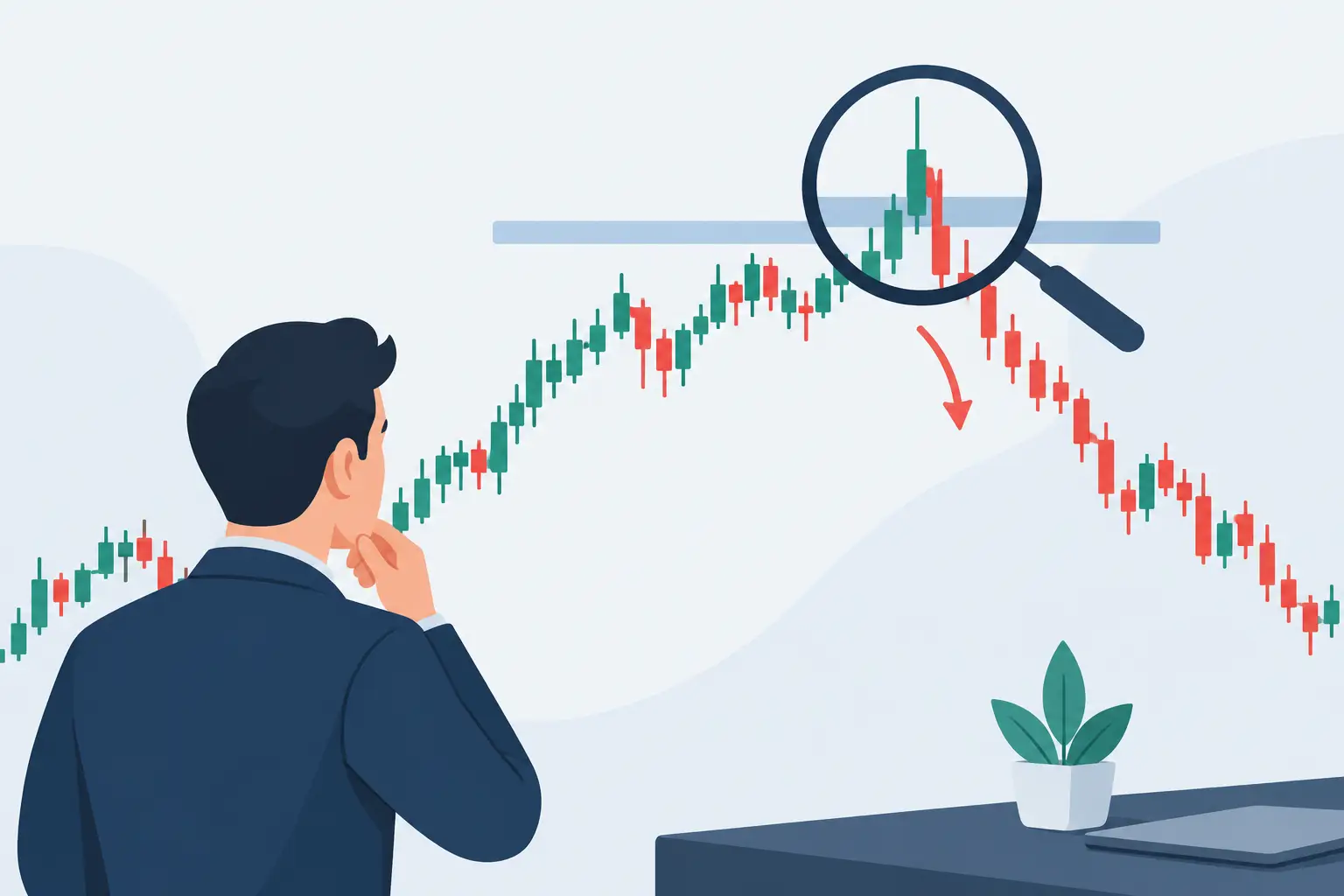
A working trader routine guide should not ask you to watch charts for three hours before your workday starts. It should give you a repeatable window to assess the market, select only qualified opportunities, define risk, and step away when there is no valid trade. The goal is not to catch every move. It is to make better decisions with the time you actually have.
For traders balancing a job, family, or other commitments, routine is an edge. You may not be able to react to every headline or monitor a dozen volatile names. You can prepare for a specific session, know what would make a trade valid, and avoid forcing activity just because you made time to sit down.
Why working traders need a narrower process
The market rewards preparation, but preparation is often confused with consuming more information. A larger watchlist, more chat alerts, and a faster news feed can create the appearance of work while increasing decision fatigue.
Working traders have a different constraint: their attention is limited. That constraint can be useful when it forces selectivity. Instead of scanning every premarket mover, build a process that answers a few practical questions: Is there a real catalyst? Is liquidity sufficient? Is the stock holding a meaningful level? Where is the trade invalidated? Can this trade be managed within the time you have available?
If the answer to the last question is no, the setup may be valid for someone else and still be wrong for your schedule. A trade that requires constant monitoring is not automatically a better trade.
A working trader routine guide built around time blocks
A reliable routine needs clear start and stop times. The exact schedule depends on your work obligations, but the sequence should remain consistent. If you trade before heading to work, a 45- to 60-minute premarket process is often enough. If you can only check the market around the opening bell, your preparation should happen earlier, not while price is moving.
The night-before reset
Your morning routine starts before the morning. Spend 10 to 15 minutes after the market closes reviewing your prior trade or paper trade. Record the setup, entry logic, stop level, exit, and whether you followed the plan. Separate execution quality from profit and loss.
A well-executed loss can confirm that your risk process worked. A profitable trade that ignored its stop or chased extended price should be reviewed as a process failure. This distinction matters because results vary from day to day, while decision quality compounds.
Then check the next day’s scheduled market events. Major economic releases, Federal Reserve decisions, and large-cap earnings can affect premarket liquidity and market direction. You are not trying to predict the reaction. You are identifying conditions that may change your risk tolerance or require you to wait for cleaner confirmation.
The premarket scan
Begin with a defined scan, not social media. Look for stocks with a credible catalyst, meaningful relative volume, active premarket liquidity, and a price structure that supports a measurable plan. Earnings, guidance, regulatory decisions, analyst actions, merger news, and material company announcements can all create the attention needed for a focused premarket trade.
A gap alone is not a setup. A stock can gap sharply and still offer no controlled entry. Look at whether price is holding above a key premarket level, reclaiming a level after a pullback, or consolidating tightly with volume. Note the prior day close, premarket high and low, whole-dollar levels, and nearby resistance or support.
One quality name is enough. Adding marginal names because the first scan feels quiet usually weakens focus. Seven01 is built around that operating principle: one selected setup, released before the outcome is known, with defined levels and documented completion.
The trade plan before entry
Write the plan in plain language before placing an order. Identify the trigger, entry area, stop, first target, and the reason the setup is invalid if price fails. This takes less than a minute and prevents a common mistake: changing the trade thesis after entering.
For example, a trader may plan to enter only if a stock breaks and holds above the premarket high with sustained volume. The stop might sit below the breakout level or a nearby consolidation low. If the stock breaks the high briefly, loses the level, and volume fades, the trade has not behaved as planned. The correct response is not to invent a new reason to stay in.
Position size belongs in the plan. Start with the dollar amount you are willing to lose if the stop is reached, then calculate share size from the distance between entry and stop. If your maximum planned loss is $100 and the stop is $0.50 below entry, the maximum position size is 200 shares. This is a hypothetical example, not a recommendation. Slippage, spreads, and fast price movement can cause actual losses to exceed the planned amount.
The opening-bell decision
The opening minutes can offer opportunity, but they also carry the widest spreads, fastest reversals, and most emotional entries. Working traders do not need to trade the open every day. In many cases, waiting for an initial range, VWAP test, or clean reclaim provides a more defined decision point.
Use a simple question at the open: is price confirming the premarket thesis or contradicting it? Confirmation might include sustained volume through a planned level and acceptance above it. Contradiction might include a failed breakout, immediate loss of VWAP, or a broad market move that changes the risk environment.
Do not let a fast candle substitute for confirmation. Speed can be a reason to avoid an entry when you cannot manage it properly.
Protect the routine with hard limits
A routine works only when its boundaries are real. Set a maximum number of trades, a daily loss limit, and an end time for your trading window. For a working trader, a one-trade or two-trade maximum can be more effective than open-ended participation.
Your loss limit should stop the day before frustration turns into revenge trading. If you reach it, close the platform or remove order-entry access. Watching a stock after your stop can be educational, but it should not become an excuse to re-enter without a fresh plan.
Time limits matter too. If work begins at 9:00 AM, do not take a position at 8:58 AM that requires active management unless your plan accounts for that constraint. A smaller target, reduced size, or no trade may be the disciplined choice.
Build a process for no-trade days
No-trade days are part of a professional routine. There will be mornings with weak catalysts, thin liquidity, choppy indexes, or price action that never reaches your trigger. Those conditions do not require a replacement trade.
Use the time to study the names that appeared on your scan. Did the stock respect premarket levels? Did VWAP act as support or resistance? Did volume expand at the expected point? This review builds pattern recognition without putting capital at risk.
A useful journal includes screenshots or notes from both trades and passes. Over several weeks, you may find that your best opportunities share a small number of traits, while your worst trades come from familiar errors such as entering late, trading low-volume names, or widening stops.
Make the routine sustainable
The best routine is one you can follow on an ordinary Tuesday, not just on a high-energy morning. Keep your tools limited, your risk fixed, and your watchlist narrow. Adjust the routine when your schedule changes, but do not rewrite it after every winning or losing day.
A working trader does not need more market noise to improve. They need a defined time window, a qualified setup, and the discipline to act only when price confirms the plan. When that structure is in place, the morning becomes less about chasing movement and more about executing one clear decision well.