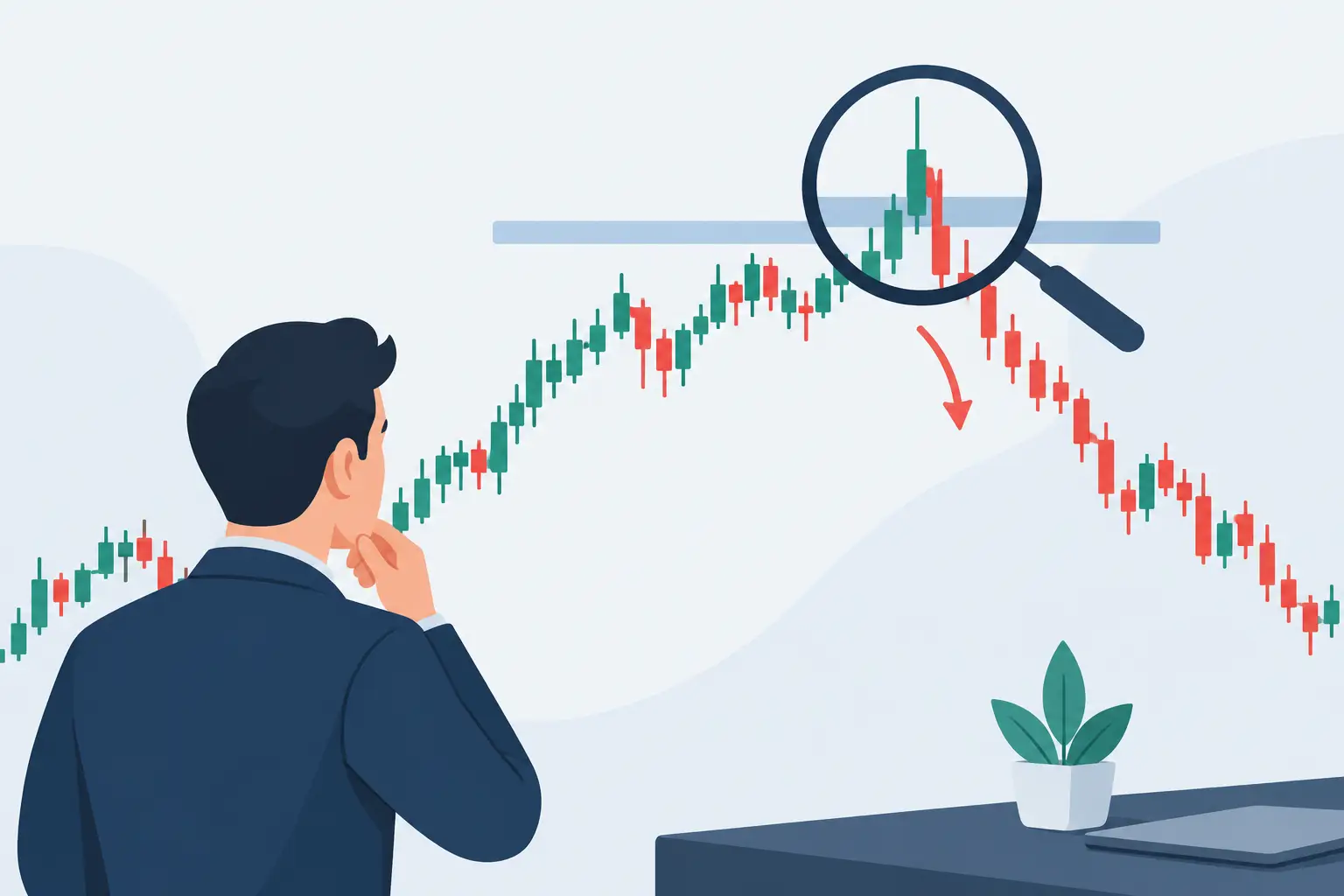
A stock can have a legitimate catalyst, expanding premarket volume, and a clean level on the chart - then still produce a poor result because of trade execution. The difference is rarely one dramatic mistake. More often, it is a rushed entry, an oversized position, a stop moved without a reason, or an exit made emotionally after the trade is already in motion.
For active traders, execution is where preparation becomes accountable. A watchlist is not a plan. A scanner result is not a plan. Even a well-researched thesis is incomplete until the entry, invalidation level, position size, and exit rules are defined.
What Trade Execution Actually Means
Trade execution is the process of placing, managing, and closing a trade according to predetermined conditions. It includes the mechanics of the order, but it is broader than clicking buy or sell. Good execution connects four decisions: when to enter, how much to buy or short, where the idea is wrong, and how profits or losses will be handled.
This matters most during the premarket and market open, when spreads can widen, volume can shift quickly, and a stock can move several percentage points before a trader has time to reconsider. Speed is useful only when it follows a plan. Fast, unstructured decisions usually create expensive inconsistency.
A trader may identify the same gap-up as everyone else. The trader who waits for confirmation at a defined level, sizes for the distance to the stop, and follows the exit plan is operating a different process from the trader chasing a green candle. The chart may be the same. The execution is not.
Execution Starts Before the Opening Bell
The strongest execution decisions are made while there is no position to defend. Before entering, define the setup in plain language. For example: the stock has a material news catalyst, meaningful relative volume, a liquid premarket range, and a level that can serve as a clear decision point. If price holds or reclaims that level with participation, there may be a trade. If it fails, there is no reason to force one.
This is where selectivity protects attention. More names do not automatically create more opportunity. A long watchlist often encourages traders to react to movement rather than execute a defined idea. One carefully selected setup can create a cleaner decision framework than ten loosely researched tickers.
Before the session begins, answer four questions:
- What exact price action qualifies as an entry?
- Where is the trade invalidated?
- What dollar amount or account percentage is at risk?
- What conditions justify taking partial profits, holding, or exiting?
These answers should be specific enough to act on. “I will buy if it looks strong” is not an execution rule. “I will enter only after price reclaims the premarket high and holds above it on increasing volume” is closer to one. The right condition depends on the strategy, the stock’s liquidity, and the broader market environment. The point is not to make every setup rigid. The point is to avoid inventing the rules after money is at risk.
Position Size Is an Execution Decision
Many traders treat position size as a confidence vote. That is backward. A larger position should not be the reward for feeling certain about a trade. Markets do not owe confirmation, and even high-quality setups can fail.
Position size should begin with defined risk. If a trader is willing to risk $100 and the planned entry is $10.00 with a stop at $9.80, the maximum loss per share is $0.20. Ignoring fees and slippage, the position size would be 500 shares. If the stop must be wider because the stock is volatile, the share count should decline.
The formula is simple: maximum dollar risk divided by risk per share equals maximum position size. Actual size may need to be smaller due to liquidity, spread, borrowing availability for short sales, or the trader’s experience with the setup.
Premarket conditions require extra caution. Thin liquidity can make a quoted stop price less reliable than it appears. A stop order may fill below the planned level in a fast decline, while a stop-limit order may not fill at all. Neither order type is universally correct. The decision depends on whether avoiding a worse fill or ensuring an exit matters more in that specific situation.
Entries Need Confirmation, Not Permission
A catalyst creates interest. It does not automatically create an entry. The market still has to show that buyers or sellers are participating where the setup requires them to participate.
For a long trade, that may mean a break and hold above a premarket level, a reclaim of VWAP after a controlled pullback, or a higher low that forms with volume returning. For a short setup, it may mean a failed breakout, rejection at resistance, or loss of a clearly defined support level. These are examples, not predictions. The same pattern can behave differently based on float, news quality, market direction, and available liquidity.
Avoid entering simply because price is moving. A stock that has already extended sharply can look strongest at the exact moment the risk-to-reward profile has deteriorated. Waiting for a planned level can mean missing some moves. That is an acceptable trade-off. A process is not designed to catch every move. It is designed to participate when the conditions align with defined risk.
Order selection also matters. A market order prioritizes getting filled but can produce poor prices in a fast or thin stock. A limit order gives price control but can leave the trader unfilled. For liquid stocks near the regular session open, a limit order with a reasonable price range may offer useful control. In volatile premarket trading, the correct choice depends on the spread, depth, urgency, and the trader’s plan. Know the order before the trigger arrives.
Manage the Trade Without Rewriting It
Once in a position, the temptation is to make the plan more flexible in only one direction: give losers more room. That is not management. It is usually avoidance.
A stop loss exists because the original trade thesis has a point of invalidation. If price breaks that level, the market has provided information. The loss may be frustrating, but taking it according to plan preserves capital and decision quality for the next opportunity.
Profit-taking requires discipline too. Some traders take a partial position into the first planned target and manage the remainder using a technical level such as VWAP, a prior high, or a higher-low structure. Others exit the full position at a predefined target. Neither approach is automatically superior. The useful approach is the one that fits the setup, is tested over a meaningful sample, and can be repeated without improvisation.
A time stop can be just as valuable as a price stop. If a premarket breakout is supposed to produce immediate follow-through but instead stalls for 20 minutes under resistance, the opportunity cost may be real. Capital and attention are tied up in a trade that is not behaving as expected. Defining when a setup has timed out prevents a stagnant position from becoming an emotional commitment.
Review the Process, Not Just the P&L
A profitable trade can be poorly executed, and a losing trade can be well executed. If a trader chases an extended move, ignores position-sizing rules, and gets lucky, the green result can reinforce behavior that eventually causes damage. Conversely, a properly sized trade that stops out at the planned level may be exactly what disciplined execution looks like.
The review should record the setup, entry, stop, size, exit, market context, and any deviation from the plan. Screenshots can help, but the written explanation matters. Was the entry early? Did volume confirm? Was the stop respected? Did the exit follow the rule or follow fear?
Seven01 is built around this kind of accountability: one focused morning setup, released before the result is known, then documented through targets, stops, or timeouts. That record is more useful than a collection of isolated winning charts because it keeps the process visible on every type of outcome.
Over time, a trading journal can reveal patterns that memory hides. Perhaps breakouts work better after the opening range forms than during thin premarket action. Perhaps a particular entry trigger creates too much slippage. Perhaps winners are consistently cut before the planned first target. Execution data turns vague frustration into a specific adjustment.
The Goal Is a Repeatable Decision
Trade execution will never remove uncertainty. A valid setup can fail, news can change, and liquidity can disappear without warning. The objective is not perfection or constant activity. It is to make each decision consistent with a process that defines risk before the outcome is known.
When the next stock begins moving, resist the urge to prove that you can react fastest. Know the level, know the risk, and let the trade earn your participation.