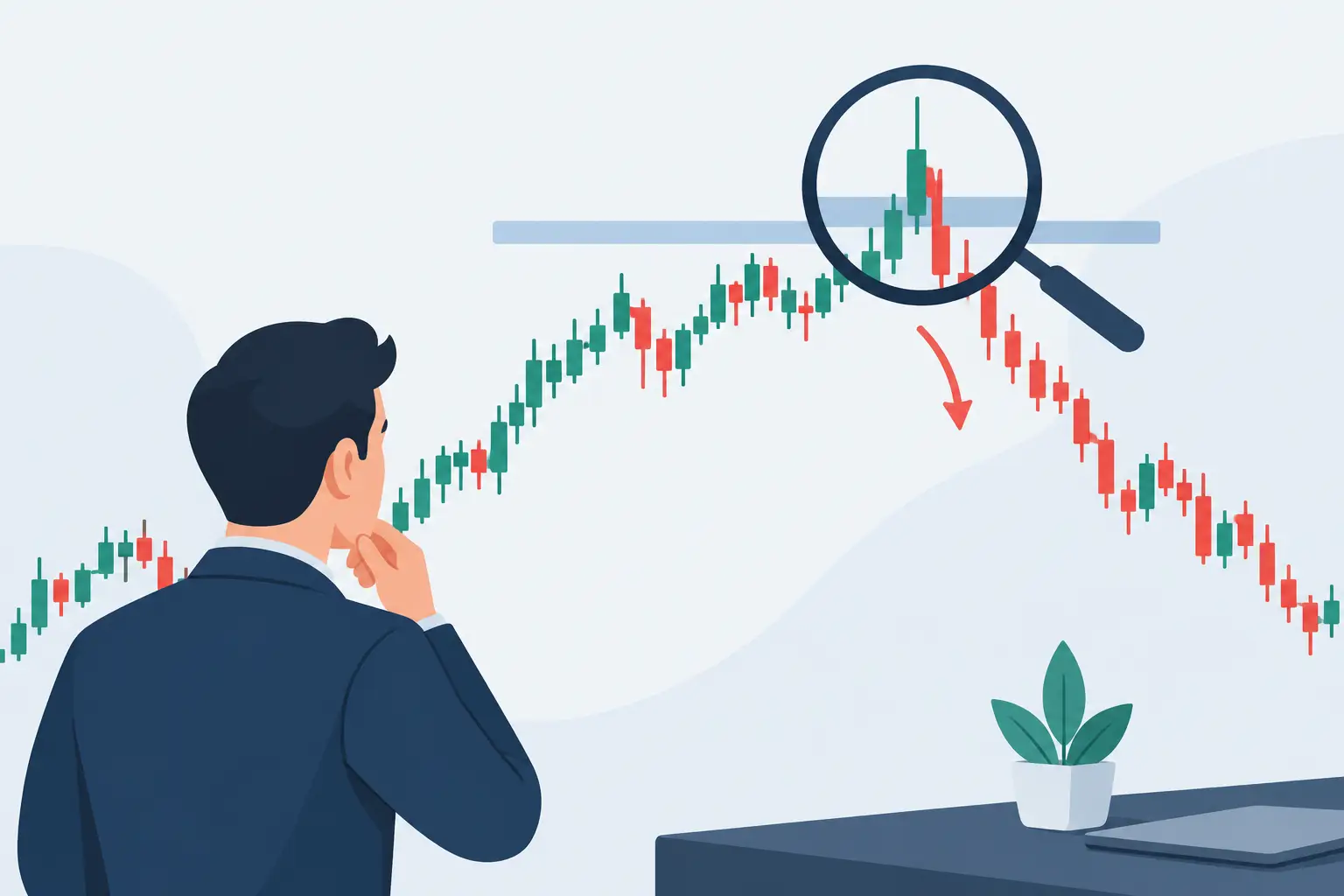
At 7:01 AM ET, a trader does not need another notification saying a stock is moving. They need to know whether that move meets a defined standard and what they will do if it does. That is the practical difference between stock alerts versus trade plans. One delivers information. The other organizes a decision before pressure, speed, and emotion take over.
For active premarket traders, the distinction matters. Premarket prices can move quickly on earnings, guidance, FDA decisions, mergers, economic data, analyst actions, or unexpected news. A scanner can surface dozens of symbols with volume and unusual price action. The challenge is not finding movement. It is selecting one opportunity, defining risk, and executing only when the market confirms the idea.
What a Stock Alert Actually Tells You
A stock alert is a notification triggered by an event, condition, or person. It may tell you that a stock is up 15% before the open, has crossed VWAP, is making a new high, has unusual volume, or is being mentioned by another trader.
Alerts can be useful. They bring attention to information that may otherwise be missed, especially when a legitimate catalyst creates unusual premarket participation. A trader who receives an alert on a low-float stock with heavy relative volume may have a reason to investigate the chart, news, float, key price levels, and broader market conditions.
But an alert is not a trade thesis. It does not automatically identify a favorable entry, a logical stop, a realistic target, or the conditions that invalidate the setup. It also does not tell you whether the alert arrived before the move, during an extended move, or after liquidity has started to fade.
That gap is where many traders lose discipline. An alert creates urgency because price is already moving. The trader may enter late, set a stop only after entering, or average down when the initial reaction fails. The alert did its job by flagging activity. It did not provide the structure needed to manage a position.
The hidden cost of too many alerts
A high-volume alert feed can feel productive while reducing decision quality. Every notification competes for attention. Each new ticker creates a fresh question: Is this the one? Should I switch? Did I miss it?
That constant reassessment is expensive. It encourages chasing, overtrading, and abandoning a sound plan for the next fast-moving chart. For a working professional or a trader with a limited morning window, an endless feed is often less useful than a short, prepared list with clear rules.
Stock Alerts Versus Trade Plans: The Core Difference
A trade plan begins before the entry. It defines the setup, the trigger, the risk, and the response to multiple possible outcomes. It turns a chart observation into an executable decision framework.
A basic premarket trade plan should answer four questions. What is the catalyst and why is the stock in play? What price action must occur before an entry is valid? Where is the trade wrong? Where will profits be reduced, taken, or managed if the move works?
For example, an alert may say that a stock is holding above VWAP after a strong earnings gap. A plan goes further: the stock must hold a specific premarket support area, reclaim VWAP with volume, and break a defined intraday level before an entry is considered. The stop may sit below the reclaim level or a nearby structural low. The first target may be premarket high, with the remaining position managed only if volume and market structure support continuation.
The exact prices will vary. The point is that the entry is conditional, the risk is known, and the outcome is not being guessed after capital is committed.
A plan also includes the possibility of no trade. If the stock loses the key level, fails to hold VWAP, opens too extended, or trades with thin liquidity and erratic spreads, standing aside can be the correct execution. This is not a missed opportunity. It is adherence to the process.
Why Plans Create Better Decisions Under Pressure
Premarket trading compresses time. Liquidity can be uneven, spreads can widen, and a price level can break or reject in seconds. Traders who build their decisions in real time are more likely to respond emotionally to every candle.
A prebuilt plan reduces the number of decisions required after the opening bell. Rather than asking, “Should I buy this because it is moving?” the trader asks, “Has my trigger occurred?” That is a narrower and more objective question.
This does not make trading predictable. A well-defined setup can still stop out. News-driven stocks can reverse sharply, and broad market conditions can overwhelm an otherwise clean chart. The value of a plan is not certainty. Its value is controlled exposure when the market does not cooperate.
Defined risk also makes results easier to review. If a trader knows the intended entry, stop, size, and target before execution, they can determine whether a loss came from a valid setup that failed or from poor execution. Those are different problems and require different adjustments.
What a Usable Premarket Plan Looks Like
A trade plan should be detailed enough to guide action but simple enough to use in a fast market. Overengineering every possible scenario can be another form of hesitation.
Start with the catalyst. Earnings and major corporate news often attract more sustained interest than a vague headline or social-media attention, but each situation requires evaluation. Then assess premarket volume, float, spread, range, and the levels already established. A stock that has traded meaningful volume near a clearly defined premarket high may offer a different opportunity than one moving on a handful of prints.
Next, identify the setup type. It may be a premarket high break, a pullback and reclaim, a VWAP hold, a failed breakout, or another repeatable pattern you have tested. The setup should have a specific trigger, not a broad opinion that the stock “looks strong.”
Then define risk in dollar terms and chart terms. A stop should be based on the level that invalidates the idea, not on the maximum loss you hope to avoid. Position size should follow from that stop distance and your predetermined account risk. If the proper size is too small to matter or the stop is too wide for your risk limit, the trade may not qualify.
Finally, plan the exit before entry. A first target can be a prior high, a whole-dollar level, a measured range, or another meaningful area of potential resistance. Some traders take partial profits there; others use a single exit rule. What matters is consistency and a method that matches the setup, volatility, and your ability to execute.
When Alerts Belong in the Process
The answer is not to eliminate alerts. The better approach is to assign them a limited role.
Alerts are useful during discovery and confirmation. They can point to a news catalyst, flag unusual volume, or notify you when a preselected ticker reaches a level you already identified. A price alert at premarket high, VWAP, or a key support zone can help a trader avoid staring at charts for hours.
Alerts become harmful when they replace selection criteria. If every alert receives equal attention, the trader has no filter. If every fast mover becomes a potential entry, there is no defined edge.
This is why a focused routine matters. Seven01 is built around one selected premarket setup each weekday morning, released before the outcome is known. The objective is not to create more activity. It is to concentrate preparation on a defined opportunity with clear levels and transparent follow-through, including targets, stops, and time-outs.
Build a Routine That Uses Both Correctly
A disciplined morning does not require a dozen screens or a stream of chat-room calls. It requires a sequence. Review the market environment, find stocks with a credible catalyst and meaningful premarket participation, mark levels, and decide which setup meets your criteria. Then use alerts only for the prices that matter to that plan.
Keep a record of each trade or planned trade. Note the catalyst, setup, entry trigger, stop, target, result, and whether you followed the rules. Over time, the journal will show whether your problem is stock selection, timing, position sizing, or trade management. It will also reveal whether the alerts you trust actually lead to setups worth trading.
The trader who reacts to every alert is always starting late. The trader who arrives with a plan can let the market do the confirming. That does not guarantee a winning trade. It does create a process worth repeating when the next premarket opportunity appears.