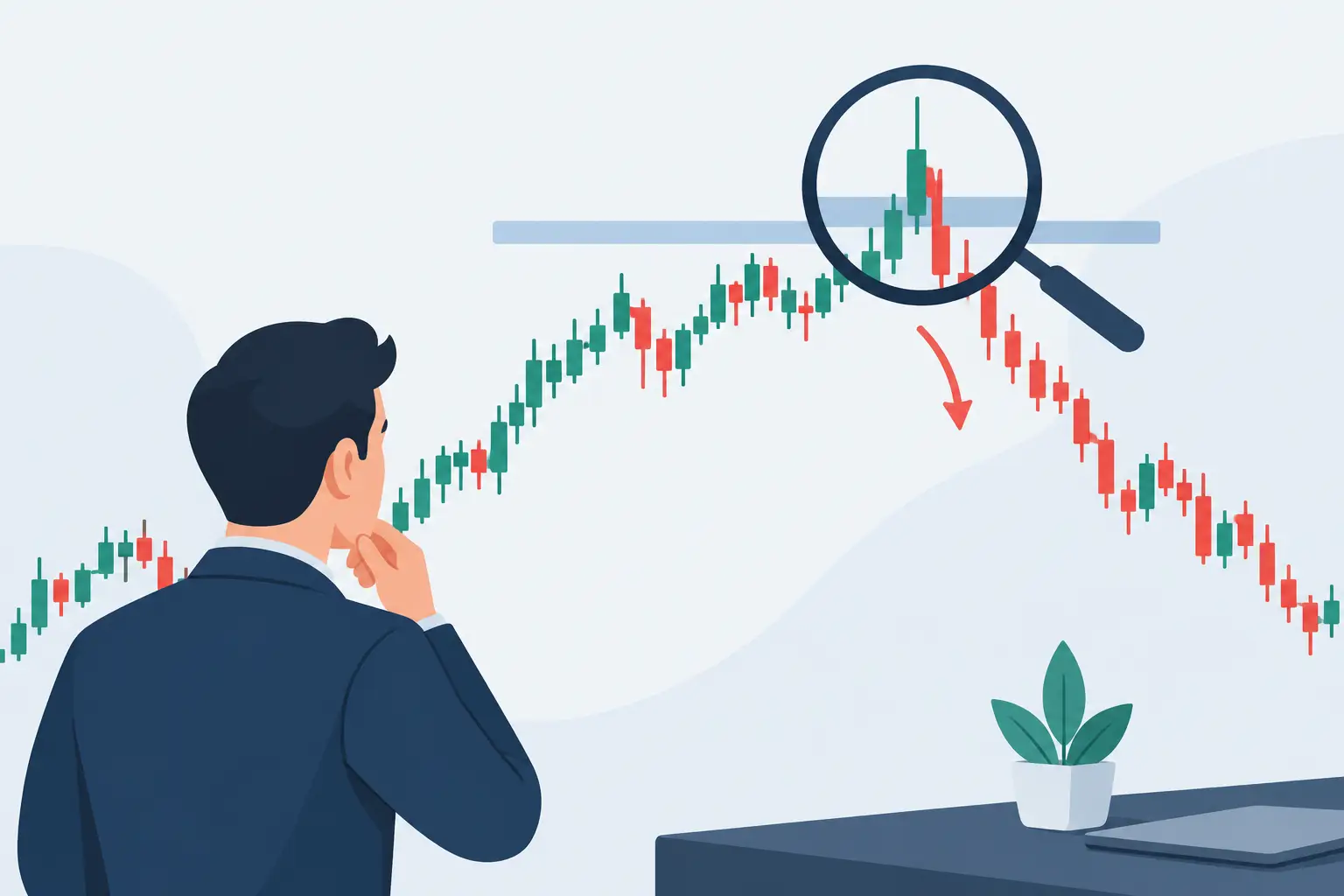
At 8:47 AM, a scanner can produce more ideas than most traders can evaluate before the open. That is the point where a useful process breaks down. Learning how to build a premarket watchlist is not about collecting every stock that is green before the bell. It is about reducing a large field of candidates to a small number of names with a real reason to move, enough participation to trade cleanly, and levels that make risk definable.
A watchlist is preparation, not a prediction. A stock can have a strong catalyst and still fail. It can show large premarket volume and still become too extended to offer a sensible entry. The goal is to arrive at the regular session with a decision framework, not a need to chase whatever is moving.
Start With a Tight Universe
Premarket scanning is most useful when it begins with filters, not curiosity. Start with U.S.-listed stocks showing meaningful relative movement and active premarket trading. The exact thresholds depend on your account size, strategy, and tolerance for volatility, but the principle does not change: exclude names that cannot support orderly execution.
A practical first pass should identify stocks with a meaningful percentage gap, an identifiable news catalyst, and enough premarket volume to show genuine attention. A 3% move on light volume may be noise. A 20% move after material earnings, regulatory news, guidance, a contract announcement, or a sector-wide development deserves closer examination.
Do not assume every headline is equal. An announced offering, reverse split, or vague promotional release can create movement without creating a high-quality trading environment. Read the source of the move. Ask whether the news changes the business outlook, whether it is already priced into the gap, and whether traders are likely to continue reacting after the opening bell.
The best watchlist is usually shorter than a trader expects. Three carefully reviewed candidates are more useful than 15 symbols you cannot explain.
How to Build a Premarket Watchlist Around Catalysts
The catalyst gives context to the chart. Before marking an entry or a target, write down why the stock is moving in one sentence. If you cannot state the reason clearly, you are not ready to trade the name.
Earnings can produce sustained interest when the report includes a meaningful revenue surprise, changed guidance, or a clear shift in the company narrative. FDA decisions, merger news, significant partnerships, analyst actions, and legal outcomes may also matter. Sector sympathy can matter too, particularly when a major company’s news affects smaller related names. But sympathy plays are generally less direct than company-specific news and may lose momentum quickly.
Then check timing. News released at 4:05 PM the prior day has had more time to be absorbed than news released at 7:30 AM. A stock that has already traded heavily overnight may have worked through much of its initial reaction. That does not rule it out, but it changes the setup you are looking for. A continuation trade, a pullback entry, and a failed gap are different ideas with different invalidation points.
Avoid building a thesis from the price action alone. A stock up 40% is not automatically strong. It is simply up 40%. The catalyst, the volume pattern, the broader market, and the available risk-to-reward determine whether it belongs on the list.
Validate Participation Before You Mark Levels
Volume is the first confirmation that a premarket move has participants. Look beyond the total share count. Consider how volume compares with the stock’s usual activity, whether trades are occurring consistently, and whether the bid-ask spread allows reasonable entries and exits.
Liquidity is a trade-off. Lower-float names can move quickly and offer large percentage ranges, but they can also spread, halt, reverse, and slip through stops. Larger, more liquid stocks may move less dramatically, yet their behavior can be easier to read and manage. Neither category is automatically better. Your watchlist should match the instruments and volatility you can execute responsibly.
Check the premarket chart for quality of movement. Is price holding above a key level, building a base, and attracting volume on pushes? Or is it making vertical moves followed by sharp retracements? A chart with repeated 10% swings may look exciting while offering poor risk control.
Also look at the broader tape. Index futures, major economic releases, Federal Reserve events, and sector performance can influence how a gap behaves after 9:30 AM. A stock-specific catalyst can overcome a weak market, but market conditions still affect follow-through, liquidity, and trader appetite.
Mark Only the Levels That Can Change Your Decision
A watchlist should not become a chart covered in lines. Mark levels that define behavior and risk. For most premarket candidates, that includes the premarket high, premarket low, prior day close, prior day high or low when relevant, and a clear area of consolidation.
The premarket high often becomes an obvious breakout reference. That visibility can bring momentum traders into the stock, but obvious does not mean safe. If price reaches the level after an extended run with declining volume, the better decision may be to wait rather than buy the first print through it.
The premarket low is equally important. It can serve as an invalidation point for a long-biased idea or a reference for a failed-gap setup. The prior close shows the size of the gap and can become relevant if the stock loses premarket support after the open.
Add VWAP after the regular session begins. Premarket VWAP can be informative, but regular-hours VWAP often carries more weight once institutional volume enters the market. Watch whether price can reclaim and hold it, reject from it, or use it as support during a pullback. Treat it as context, not a stand-alone signal.
For each candidate, identify three things before the bell: the level that triggers your interest, the level that proves the idea wrong, and the area where you would consider taking profits or reassessing. If those points are too close together or too far apart for your risk limits, remove the stock from consideration.
Build a Trade Plan, Not a Morning Prediction
A strong watchlist entry is concise. It should tell you what matters without encouraging impulsive action. One format is:
- Catalyst and current premarket context
- Key levels: high, low, prior close, and major support or resistance
- Preferred scenario, such as a hold above support and break through the premarket high
- Invalidation level and maximum planned risk
- Conditions that require no trade, such as an extended opening spike or poor liquidity
The final point is where discipline shows up. Many losses begin with a valid idea that becomes an invalid trade because price runs too far before entry. A premarket watchlist should give you permission to stand aside when the setup changes.
Use position size to translate the plan into actual risk. If your stop is wider because the stock is volatile, reduce share size. If the spread is too wide to honor your planned stop, do not force the trade. A stop on paper is not the same as a fill in a fast-moving market, especially in thin premarket trading.
Use a Repeatable Morning Sequence
Consistency matters more than finding a new scanner filter every week. Set a defined review window and work through the same sequence: scan for gaps and volume, verify the catalyst, assess liquidity and float characteristics, mark levels, then narrow the list.
By the final part of premarket, rank candidates rather than treating them equally. One name may have the cleanest catalyst, best volume, clearest level, and most manageable risk. Another may remain on a secondary list only if the primary setup fails to develop. This reduces the tendency to jump between charts once the market opens.
Seven01 is built on this idea of focused preparation: one selected setup, defined before the outcome is known, with transparent documentation through the result. That approach does not eliminate risk. It removes unnecessary choices and keeps execution tied to a plan.
Keep a record of your watchlists after the session. Note which names had legitimate catalysts, whether volume held after the open, where your levels mattered, and whether you followed your stated conditions. Over time, this review reveals whether your selection process is improving or whether you are repeatedly drawn to the same low-quality patterns.
A premarket watchlist earns its value when the opening bell gets loud. If your plan is clear enough to tell you when not to trade, you have already done the most important work before 9:30 AM.