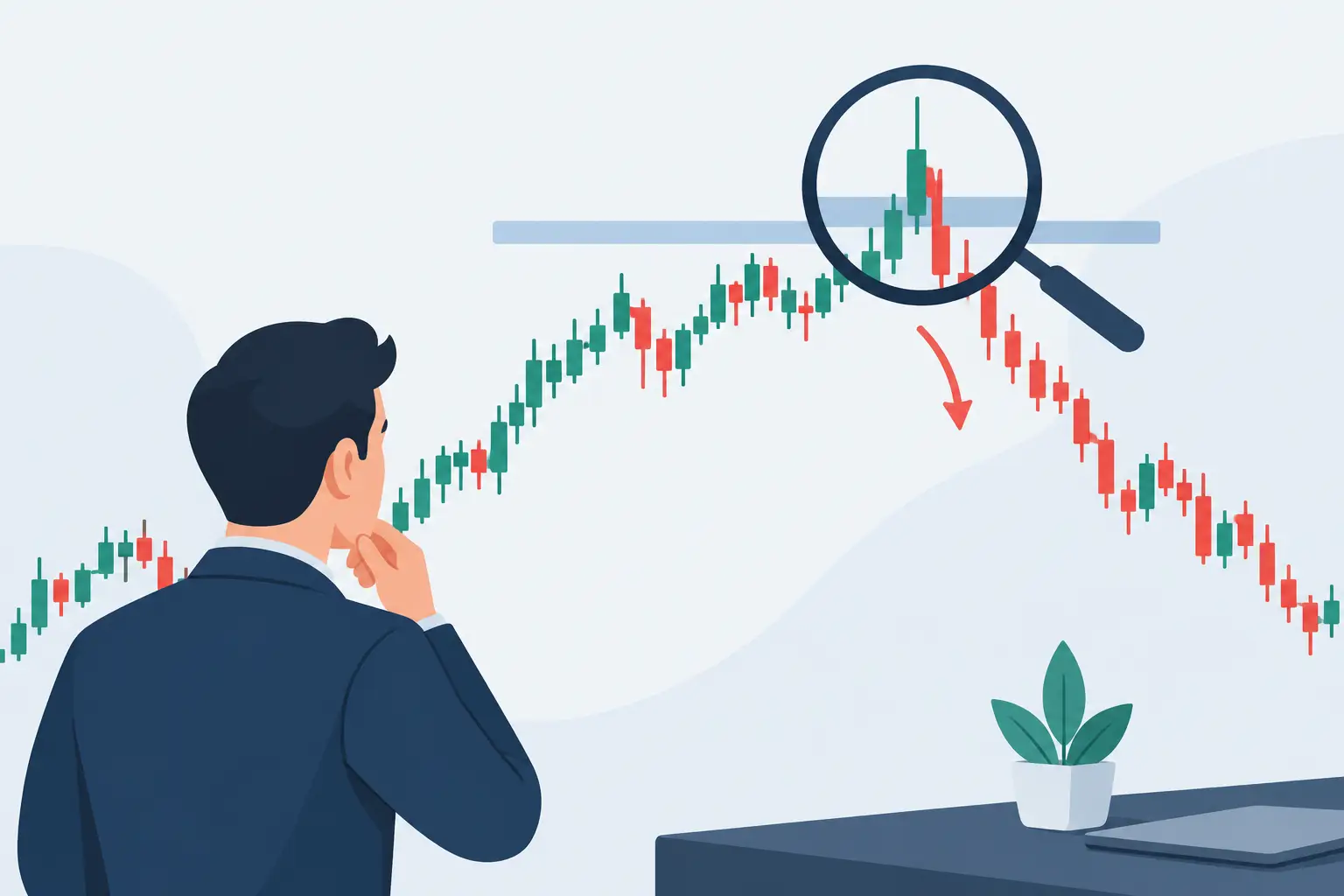
A stock is up 35% before the opening bell. The chart is vertical, social feeds are loud, and every pullback looks like it might be the last chance to get in. That is the exact moment traders need to know how to avoid chasing stocks. The answer is not ignoring momentum. It is separating a planned momentum trade from an emotional entry after the planned opportunity has already passed.
Chasing usually begins before the order is placed. It starts when a trader has no defined entry, no invalidation level, and no clear reason the next push should occur. Price becomes the reason for the trade: it is moving, so it feels necessary to participate. A structured premarket process replaces that urgency with criteria.
Why Traders Chase Stocks
Chasing is rarely a knowledge problem. Most traders understand that buying an extended candle can produce poor risk-to-reward. The difficulty is execution when a fast mover creates fear of missing out.
Premarket trading amplifies that pressure. Float can be limited, liquidity can change quickly, and a headline can produce an aggressive gap before most market participants are active. A trader who opens a scanner late may see only the move already in progress. Without a plan, the natural response is to buy strength at the least favorable location and hope another buyer arrives.
That approach creates a difficult trade structure. The entry is high, the logical stop may be far below, and nearby resistance may limit upside. Even if the stock continues higher, a poor entry can turn a good idea into a trade with unacceptable risk.
The goal is not to catch every move. The goal is to take trades where the entry, stop, target, and reason for participation are defined before emotion takes control.
How to Avoid Chasing Stocks With a Premarket Plan
A disciplined trader decides what qualifies before the stock starts moving. In the premarket, that begins with a catalyst, meaningful relative volume, a tradable price range, and identifiable levels. A stock without a clear catalyst or sustained participation may move, but that does not make it a high-quality opportunity.
Start by asking a practical question: what would need to happen for this stock to become actionable? The answer should be specific. For example, price may need to hold above a key premarket level, reclaim VWAP after an orderly pullback, or break a defined range with volume. If none of those conditions occur, there is no trade.
This changes the trader's role. Instead of reacting to each candle, you are waiting for evidence that the setup is behaving as expected. A stock that runs without offering your planned entry is not a missed trade. It is simply a trade that did not meet your criteria.
Build the Trade Around Levels, Not Feelings
Before the regular session opens, mark the levels that matter. These often include the premarket high and low, prior-day close, prior-day high, whole-dollar levels, VWAP, and the opening range once the market is live. The exact levels depend on the stock and setup, but the principle does not change: the chart should give you locations where risk can be measured.
Suppose a stock gaps on earnings and holds above its premarket support level. A potential long may be valid only if it consolidates near that level and then breaks higher on renewed volume. In that case, the entry is not “whenever it starts moving.” It is tied to a defined break, with an invalidation point below the consolidation or support level.
If price instead explodes several points through the planned entry without consolidation, the trade has changed. Entering late may require a wider stop while placing the next resistance too close to justify the risk. Passing is not passive. It is a decision to protect trade quality.
Define Risk Before You Define Profit
Chasing often hides behind a profit target. A trader sees a stock moving and starts calculating how much it could run. The better question is where the idea is wrong.
Every trade needs an invalidation level. That may be a loss of VWAP, a break below a recent higher low, failure back into a prior range, or a break of premarket support. The correct stop is determined by market structure, not by the dollar amount a trader would prefer to lose.
Once the stop is clear, position size follows. If the required stop is too wide for your risk limit, reduce size or do not take the trade. Never solve an oversized position by moving the stop farther away. A small, planned loss is part of trading. An unmanaged loss often begins with an entry that was never properly planned.
Risk also includes liquidity. A thin premarket stock can move through a stop level quickly, particularly around news, halts, or the opening auction. Wide spreads and inconsistent prints are not minor details. They affect whether the setup is executable at all.
Use Volume and VWAP as Filters
Price alone is incomplete information. A move that looks powerful on a one-minute chart may have little actual participation behind it. Relative volume helps confirm whether traders are actively involved, while VWAP provides a useful reference for where average intraday participation is occurring.
For many long setups, holding above VWAP after the open can support a bullish intraday structure. For short setups, repeated failure at VWAP or rejection from a key resistance level may matter more than a single red candle. Neither signal is a guarantee. They are context tools that help a trader avoid buying an extended move just because it is green.
Watch how volume behaves during consolidation. Healthy continuation setups often show reduced volume during a controlled pullback and expanding volume when price breaks a defined level. If a stock is already extended and volume begins to fade, entering because of prior momentum can leave you buying into exhaustion.
Set Rules for Trades You Will Not Take
The fastest way to improve discipline is to create exclusion rules. These rules reduce the number of decisions required in real time.
You may decide not to enter after three consecutive expansion candles, not to buy directly into a major resistance level, not to trade a stock after it has exceeded your planned risk distance, and not to take a setup without a clear catalyst and volume. The right rules depend on your trading style, but they should be written before the session begins.
A time rule can also help. Some traders perform best only during a defined window around the open, when liquidity and volume are more consistent. Others focus on premarket continuation patterns. Trading outside your strongest window because a stock is moving is another form of chasing.
Seven01 is built around this kind of selectivity: one defined premarket setup, released before the outcome is known, with risk and execution treated as part of the process rather than an afterthought.
Manage the Open Without Reacting to Every Candle
The opening minutes can invalidate a premarket thesis, confirm it, or create entirely new levels. That uncertainty is why immediate entries require more precision, not more aggression.
If your planned entry triggers, execute according to the plan. If it does not, let the chart develop. Avoid canceling a valid setup because of one quick wick, but do not reinterpret every warning sign just to stay in a trade. The distinction comes from having your invalidation level defined in advance.
If a stock runs without you, resist the urge to convert disappointment into a late entry. Review whether a secondary setup can form around a pullback, VWAP reclaim, or new consolidation. If no clean structure develops, move on. There will be another session.
Keep a Chase Log
A trading journal should not only track wins and losses. Track the trades you wanted but did not take, especially the ones that felt urgent. Note the time, the catalyst, the entry you considered, where a logical stop would have been, and whether the setup actually met your rules.
This review produces useful evidence. Some missed runners will keep going, which can reinforce the temptation to chase. Others will reverse sharply, showing why late entries carry hidden risk. Over a meaningful sample, you can measure whether your rules are filtering poor locations or causing you to miss a setup worth refining.
The goal is not perfect participation. It is repeatable execution. When a stock moves without offering a planned entry, let it go without turning it into a personal failure. Your edge is built in the trades you can define, manage, and review - not in every chart that happens to move fast.